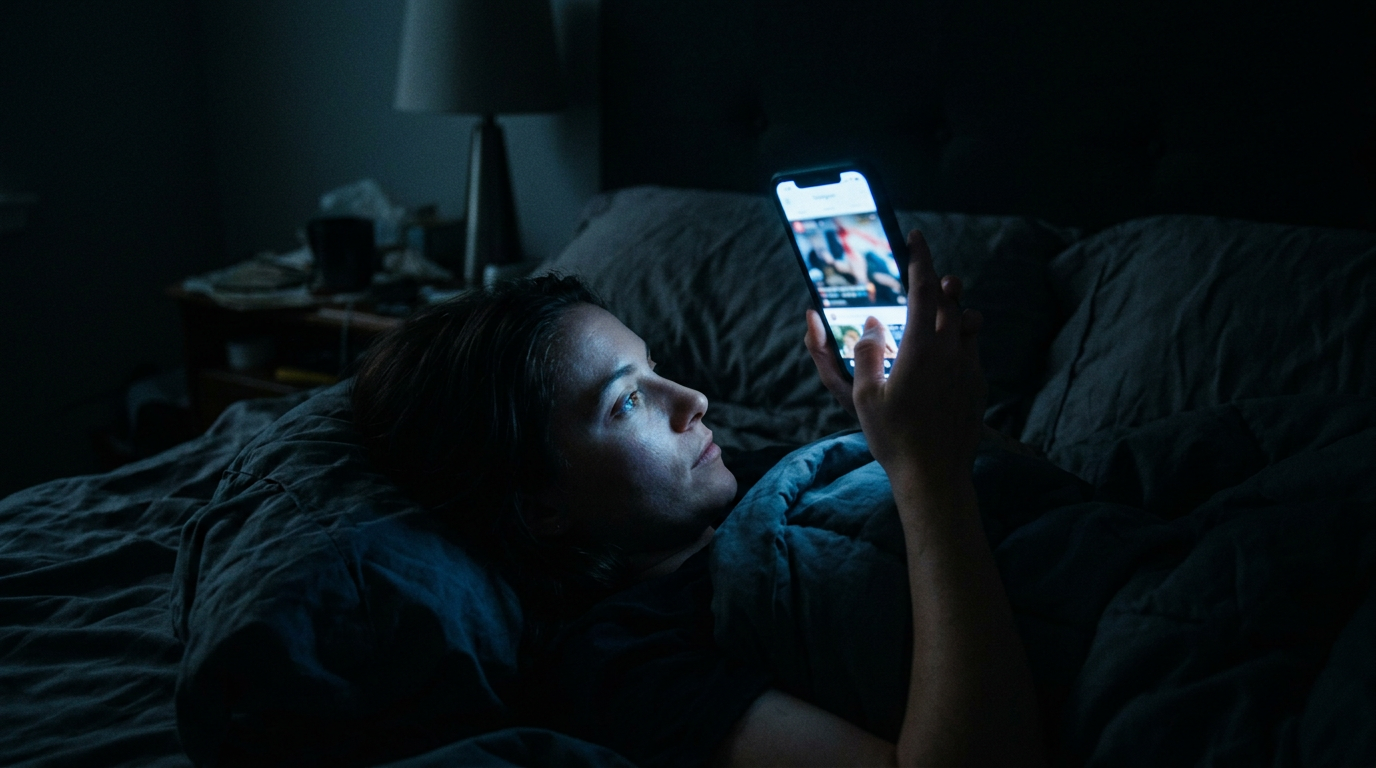
Your phone is not “bad.” It is optimized — for engagement, not for your quarterly goals. So when you lose an hour you did not intend to lose, that is not proof you are hopeless. It is proof the battlefield is asymmetric.
The problem: attention is auctioned in milliseconds
Apps compete for:
- Novelty — new messages, new posts, new red dots.
- Uncertainty — maybe something important arrived (usually it did not).
- Frictionless re-entry — one unlock and you are back in the casino.
Focus is not “try harder.” Focus is protecting the first sixty seconds after impulse.
What actually works (without fantasy willpower)
- Shrink the doorway — make the distracting path slightly annoying (folders, grayscale, app limits). You are not banning life; you are adding one breath between impulse and action.
- Replace, don’t only remove — boredom is a cue. Give your brain a planned alternative (paper list, walk, one-line journal).
- Track the real enemy — not “screen time” as a shame number, but when you slip: after stress, after meals, in bed.
The smallest fix that sticks
Pick one daily rule you can keep for two weeks:
- No phone in bed, or
- First 15 minutes of morning without feeds, or
- One “focus block” with phone in another room.
Consistency beats intensity. A small rule you keep changes your identity faster than a heroic plan you abandon.
Where Unutma fits (if you want offline-shaped calm)
Unutma is built around on-device personal workflows — lists, journal, quick checks — so your private life is less dependent on cloud-first attention products. It will not “fix addiction,” but it can be part of a calmer stack: capture tasks and notes without turning your whole day into a dashboard. More on privacy posture in privacy-first productivity apps.
Bottom line
Your focus is stolen because the product is designed to steal it — politely, legally, one dopamine unit at a time. Fight with design, not shame: smaller doorways, replacement habits, and rules tiny enough to survive Wednesday.