Habit trackers split the world into two tribes. One tribe wants charts, streaks, correlations, and the faint thrill of optimizing life like a sports team. The other tribe wants proof they showed up — a quiet tap, a line in a journal, nothing that turns a walk into a KPI.
In 2026, the best approach is not “which app has the most features.” It is which feedback loop matches your nervous system. This article compares simple daily logging with heavy analytics, and shows where Unutma fits if you want light structure without a second job.
Simple logging: what it is good for
Simple logging means:
- A small number of actions you can repeat.
- Low cognitive load when you are tired.
- Evidence that is good enough to build trust with yourself.
Examples: one checkbox, one sentence, one timestamped “I did the thing.”
Best for: People who quit fancy systems after two weeks, people recovering from burnout, and anyone whose inner voice gets loud when numbers go red.
Risk: If you never review, you can drift — but that is also true for analytics-heavy apps if you only collect and never decide.
Heavy analytics: what it is good for
Heavy analytics means:
- Streaks, rolling averages, weekly summaries, correlations, “insights.”
- More screens, more notifications, more opportunities to “tune the system.”
Best for: People who genuinely enjoy optimization, athletes, quantified-self hobbyists, and anyone whose problem is not motivation but measurement.
Risk: Metric guilt — the feeling that a broken streak erases real progress. Also: you can spend more time grooming the tracker than doing the habit.
The honest middle: “enough visibility”
Most adults do not need a NASA control room to drink water. They need:
- A cue (when and where the habit happens).
- A record (proof for the skeptical future version of you).
- An occasional review (weekly is plenty for many habits).
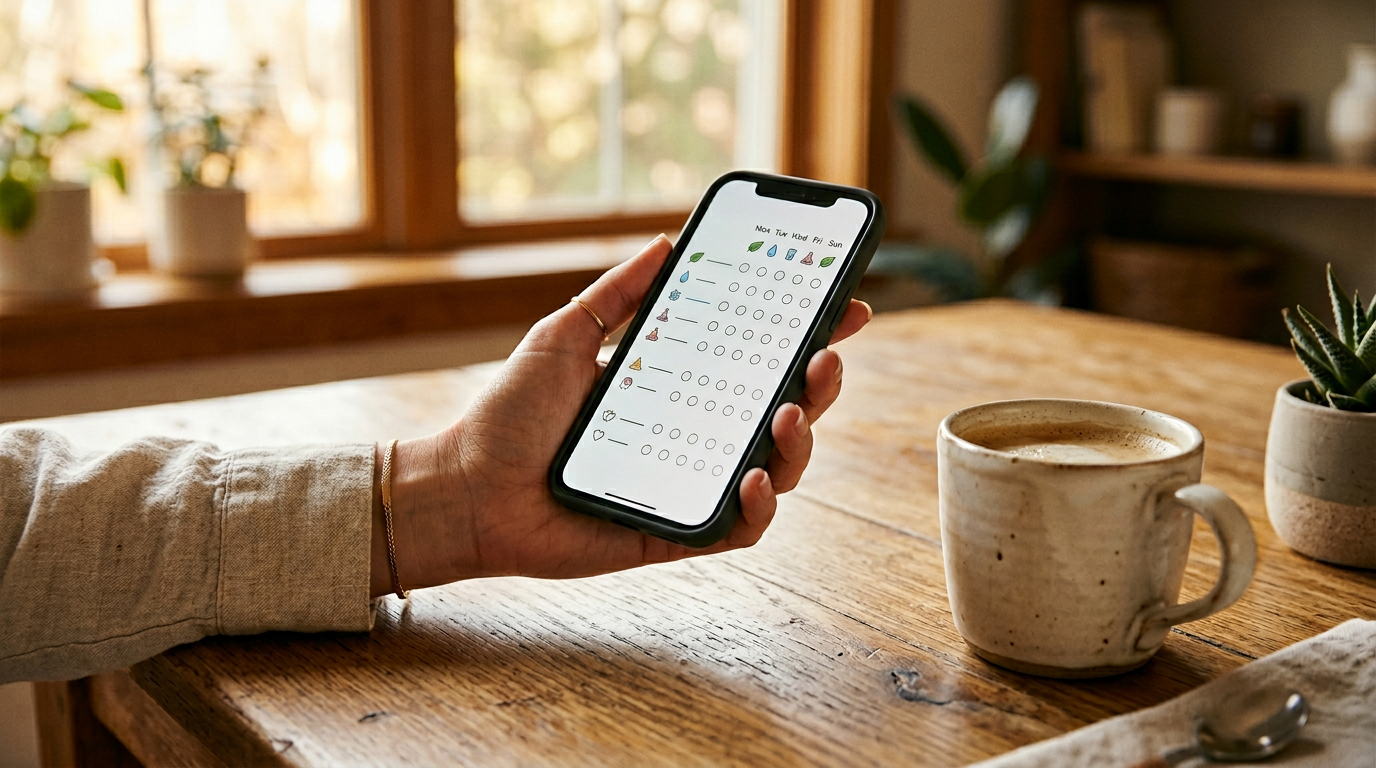
That is why Unutma’s Actions area is designed as tap logging with optional streaks and statistics — visibility exists, but the primary interaction stays small and real-world: “Did I do this check?” rather than “How optimized am I as a human?”
If you want the broader habits philosophy, pair this with how to build habits that stick.
Where Unutma fits (compared to classic habit apps)
Classic habit apps often push daily streaks front and center — that helps some people and harms others. Unutma’s approach is closer to contextual logging:
- You define custom buttons for checks that matter in your life.
- You get timestamps and patterns over time without forcing every habit into the same green-chain fantasy.
Best for: People who want habit evidence sitting next to tasks, journal, and routines — not a standalone gamified silo.
Not ideal for: Users who want deep social accountability features, public leaderboards, or coach marketplaces inside the app — that is a different product category.
A 5-minute decision checklist
Answer yes/no:
- Do streaks motivate me, or do they shame me?
- Do I want one app for habits only, or habits inside my general life system?
- Will I actually open a chart weekly, or is that fantasy?
If streaks shame you, prefer simple logging and hide analytics where possible. If you love charts, pick a tracker that does analytics well — and protect your sleep from notification spam.
Bottom line
The best habit tracker in 2026 is the one that makes the habit more likely tomorrow, not the one with the prettiest graph today. Simple logging beats heavy analytics when your life needs gentleness; analytics wins when your life needs precision.
If you are building weekly rhythm beyond habits, weekly planning tips is a practical next read.